
Auto Accidents in the Rain in Claremont, California: What Drivers Need to Know
Rainy weather can transform familiar roads into hazardous zones, especially in Claremont, California, where sudden downpours catch many drivers off guard. As a city in the Inland Empire region of Southern California, Claremont experiences periodic storms that slick up streets like Foothill Boulevard and Indian Hill Boulevard, increasing the risk of auto accidents. According to data from the U.S. Department of Transportation, about 75% of weather-related crashes nationwide occur on wet pavement, with 47% happening during active rainfall. In California, where rain is less frequent but intense, these incidents often lead to serious injuries, property damage, and complex personal injury claims. This article explores the causes, legal implications, and preventive measures for auto accidents in the rain in Claremont, drawing on local safety insights and state laws to help residents stay safe and informed.
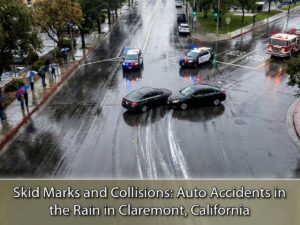
Skid Marks and Collisions: Auto Accidents in the Rain in Claremont, California
What Causes Auto Accidents in the Rain in Claremont, California?
Rain significantly heightens accident risks in Claremont due to reduced visibility, slippery roads, and driver inexperience with wet conditions. The City of Claremont's Local Roadway Safety Plan (LRSP) from 2024, based on data from 2017-2021, reports 1,146 total collisions on city roadways, with unsafe speeding as a top factor in 25.3% of cases. While the plan doesn't isolate rain-specific stats, it highlights safety concerns like water flow during rain storms in school zones near areas such as Indian Hill Boulevard and Harrison Avenue, which could exacerbate hydroplaning or poor traction. Statewide, the California Highway Patrol (CHP) notes up to a 50% surge in traffic incidents on rainy days compared to dry ones, often tied to wet pavement reducing tire grip.
In Claremont, high-risk intersections like Indian Hill Boulevard and Arrow Highway see frequent broadside collisions (25.3% of total crashes), which worsen in rain when drivers fail to yield properly. Rear-end crashes, making up 22% of incidents, spike as stopping distances double on slick surfaces. Hit-object accidents (16%) also rise when vehicles skid into curbs or trees along roads like Mount Baldy Road. Pedestrians and bicyclists face elevated dangers, with 53 pedestrian and 70 bicycle collisions noted in the LRSP period, many at signalized spots where rain obscures crosswalks.
Local factors compound these issues: Claremont's mix of residential streets, college campuses, and highways like the I-10 means diverse traffic patterns. During storms, foliage from the city's tree-lined avenues can create blind spots, and inadequate drainage in some segments leads to pooling water. Drivers unfamiliar with California's sporadic rains often don't adjust speeds, violating the state's Basic Speed Law under California Vehicle Code (CVC) 22350, which requires prudent driving based on weather conditions.

Seeking Help After Auto Accidents in the Rain in Claremont, California
How Does Rain Impact Liability in Claremont Car Accidents?
Determining fault in rain-related auto accidents in Claremont follows California's comparative negligence rules, where compensation can be reduced based on each party's share of blame. Under CVC 22350, drivers must slow down for wet roads, and failing to do so can establish negligence even if weather played a role. For instance, if a driver hydroplanes into another vehicle on Foothill Boulevard because they were speeding, they could be primarily liable, as courts expect reasonable adjustments for conditions.
California law doesn't allow “acts of God” like rain to fully excuse fault; instead, it emphasizes driver responsibility. In a rear-end collision during a downpour, the trailing driver might be at fault for not maintaining a safe following distance, per CVC 21703. However, if road defects like poor drainage contributed—such as in school zones flagged in Claremont's LRSP—government entities could share liability under premises liability principles, requiring proof of negligence in maintenance.
Insurance companies often scrutinize these cases, using police reports and witness statements to apportion fault. In Claremont, where 30 killed or severely injured (KSI) collisions occurred from 2017-2021, rain can amplify injury severity, leading to claims for medical bills, lost wages, and pain. Victims should document weather conditions, as evidence like photos of wet roads supports arguments that the at-fault driver didn't adapt properly.
Real-world examples from Southern California illustrate this: A driver cited for unsafe speed in rain might face full liability for a multi-car pileup, while shared fault could apply if both parties ignored headlights requirements under CVC 24400. Consulting a personal injury attorney early helps navigate these nuances, ensuring fair compensation under California's no-fault insurance thresholds for serious injuries.
What Are the Common Injuries from Rain-Related Auto Accidents in Claremont?
Rain-slicked roads in Claremont often result in high-impact crashes, leading to a range of injuries that demand prompt medical and legal attention. Whiplash from sudden rear-end stops is prevalent, causing neck strain that may not appear immediately but can lead to chronic pain. More severe cases involve traumatic brain injuries (TBIs) from head impacts during skids, especially in broadside collisions at busy spots like Base Line Road and Towne Avenue.
Fractures and spinal cord damage occur when vehicles hydroplane and flip, as seen in higher-speed rural segments like Mount Baldy Road. Pedestrians struck in low-visibility rain face lacerations, broken bones, or internal injuries, with the LRSP noting 13 KSI incidents involving vulnerable users. Emotional trauma, such as post-traumatic stress, also qualifies for compensation in personal injury claims.
In California, injury victims can seek damages if negligence is proven, but statutes of limitations—typically two years under Code of Civil Procedure 335.1—apply. Documenting injuries with medical records strengthens cases, particularly when rain contributed to crash severity.
What Steps Should You Take After an Auto Accident in the Rain in Claremont?
If involved in a rain-related auto accident in Claremont, prioritize safety and evidence collection to protect your personal injury claim. Follow these steps:
- Ensure Safety and Call for Help: Move vehicles out of traffic if possible, activate hazard lights, and call 911. California law requires reporting crashes with over $1,000 in damage or any injury, as per the Claremont LRSP and CVC 20002. Note weather details in the police report.
- Document the Scene: Photograph wet roads, skid marks, and damage from multiple angles. Gather witness contacts, as their accounts of slippery conditions can prove negligence.
- Exchange Information: Share details with other parties but avoid admitting fault, which could harm your claim under comparative negligence rules.
- Seek Medical Attention: Even minor aches can indicate serious injuries; get checked promptly to establish a treatment record for compensation.
- Contact an Attorney: A personal injury lawyer can investigate, negotiate with insurers, and file claims, especially if rain-related factors like poor visibility are involved.
Acting quickly preserves evidence that fades with drying roads, strengthening your case for damages.
Safe Driving Tips for Auto Accidents in the Rain in Claremont, California
How Can Drivers Prevent Auto Accidents in the Rain in Claremont?
Prevention starts with awareness of Claremont's unique wet-weather challenges. Here are key tips:
- Reduce Speed and Increase Distance: Adhere to CVC 22350 by slowing below posted limits on wet roads
- Use Headlights and Wipers: Always turn on lights in rain for visibility, as required by CVC 24400, reducing risks at intersections like Foothill and Mountain.
- Avoid Hydroplaning: Check tire tread and steer gently through puddles, especially in school zones with noted water flow issues.
- Stay Alert for Vulnerable Users: Yield to pedestrians and cyclists, who face higher KSI risks in low light and rain.
- Prepare Your Vehicle: Ensure brakes and tires are in good condition before storms hit Southern California.
By following these, drivers can minimize accidents and potential injuries.
Auto Accidents in the Rain in Claremont, California: What Drivers Need to Know
Why Choose Napolin Accident Injury Lawyer for Your Claremont Rain-Related Accident Case?
Napolin Accident Injury Lawyer serves Southern California, including Claremont, with a proven track record in handling rain-related auto accident cases. Our team understands the nuances of California personal injury law, from proving negligence under wet conditions to securing maximum compensation for injuries and losses. We offer personalized strategies tailored to each client's needs, fighting aggressively against insurers to cover medical costs, lost income, and pain. Committed to justice, we've helped countless victims recover what they deserve. For a free consultation, call (866)-NAPOLIN today—let us guide you through your claim with expertise and compassion.