
Understanding Auto Accidents in the Rain: Key Causes and Risks for Southern California Drivers
Southern California's typically dry climate makes rainy days particularly hazardous for drivers. When infrequent showers hit areas like Los Angeles, Orange County, or the Inland Empire, roads quickly become slick from accumulated oil and debris. This sudden change often leads to a surge in auto accidents, as motorists fail to adapt their habits. According to California Highway Patrol reports, traffic collisions can increase by up to 50% on wet days compared to dry ones. For victims, knowing the common triggers and legal implications is essential to protect rights and pursue compensation. This article explores the dangers, liabilities, and steps forward for those affected by rain-related crashes in SoCal.
Rain transforms familiar routes into perilous zones. The first rains of the season are especially dangerous, as they lift built-up grime from roadways, creating a slippery film. Drivers accustomed to sunny conditions may not anticipate this, leading to loss of control. Common scenarios include vehicles sliding through intersections or into barriers, highlighting why awareness is key for personal injury prevention.
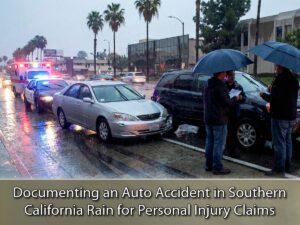
Documenting an Auto Accident in Southern California Rain for Personal Injury Claims
Who Is at Fault in a Rain-Related Auto Accident in Southern California?
In California, weather alone rarely excuses fault in auto accidents. Under the state's Vehicle Code Section 22350, known as the Basic Speed Law, drivers must operate at a speed reasonable for conditions, including rain. This means even if you're under the posted limit, speeding on wet pavement can make you negligent. Liability often stems from failures to adjust behavior, such as not increasing following distance per Vehicle Code Section 21703.
For instance, in a rear-end collision during a downpour in Los Angeles, if the trailing driver was too close and couldn't stop due to hydroplaning, they could bear primary responsibility. California's pure comparative negligence system, outlined in Civil Code Section 1714, allows shared fault. If you're 20% at fault for not using headlights as required by Vehicle Code Section 24400, you can still recover 80% of damages from the other party.
Proving negligence requires evidence like police reports noting weather, witness statements on driver actions, and expert analysis of skid marks. In Southern California, where flash floods can exacerbate issues, cities like San Diego or Riverside might face liability if poor drainage contributes, per the Government Claims Act—claims must be filed within six months. Victims should document everything to build a strong case against at-fault parties, ensuring fair compensation for injuries.
A multi-vehicle pileup on the 405 Freeway during rain might involve a commercial truck failing to slow, violating federal regulations for reduced speed in wet conditions. Such cases underscore that drivers, not the rain, are often accountable.
What Steps Should You Take Immediately After an Auto Accident in the Rain in Southern California?
Experiencing an auto accident in rainy conditions can be disorienting, but quick actions protect your health and legal position. Prioritize safety and documentation to strengthen any personal injury claim.
- Ensure Safety and Seek Medical Help: Move to a safe spot if possible, turn on hazard lights, and call 911. Even minor crashes in rain can cause hidden injuries like whiplash—get checked immediately.
- Document the Scene Thoroughly: Photograph damage, road conditions (e.g., standing water or oil slicks), weather signs, and injuries. Note time, location, and visibility issues, as these prove conditions contributed but don't absolve negligence.
- Exchange Information and Gather Witnesses: Collect details from other drivers, including insurance, and get contact info from bystanders who saw the crash.
- File a Police Report: Insist on an official report, which often includes weather details and initial fault assessments, vital for insurance disputes.
- Notify Your Insurer Promptly: Report the accident but avoid admitting fault—let professionals handle negotiations.
- Consult a Personal Injury Attorney: Early legal advice navigates complexities like shared fault in California's system, maximizing compensation for medical bills, lost wages, and pain.
Following these steps minimizes risks and positions you for recovery. In SoCal's variable weather, where rain can lead to chain-reaction crashes, detailed records are crucial.

Safe Driving Tips to Prevent Auto Accidents in Southern California Rain
How Can Drivers Prevent Auto Accidents in the Rain Across Southern California?
Prevention starts with preparation, especially in regions like the Inland Empire where rare rains catch drivers off guard. Adopting safe habits reduces risks and potential liability.
- Reduce Speed Gradually: Slow down to maintain traction; hydroplaning often occurs above 35 mph on wet roads.
- Increase Following Distance: Double or triple space from the vehicle ahead—wet brakes need more time to stop.
- Use Lights and Wipers Effectively: Activate headlights for visibility, required when wipers are in use, and ensure they're functional.
- Avoid Sudden Maneuvers: Brake and turn smoothly to prevent skids; if hydroplaning, ease off the gas without slamming brakes.
- Maintain Your Vehicle: Check tires for tread (at least 2/32 inch), brakes, and lights regularly—negligent maintenance can lead to fault findings.
- Plan Ahead: Check weather apps, avoid flooded areas, and consider delaying trips during heavy storms.
Local infrastructure helps too: CalTrans maintains drainage, but drivers must adapt. Defensive driving courses tailored to wet weather build skills, potentially lowering insurance rates. By prioritizing these measures, you safeguard yourself and others, avoiding the trauma of rain-induced crashes.
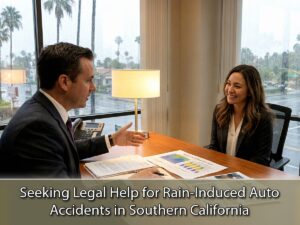
Seeking Legal Help for Rain-Induced Auto Accidents in Southern California
What Compensation Can Victims Seek in Rain-Related Personal Injury Cases in Southern California?
Victims of auto accidents in the rain deserve full compensation under California law. Damages cover economic and non-economic losses, tailored to your situation.
Economic damages include medical expenses like hospital stays, therapy, and future care; lost income from missed work; and property repairs. Non-economic awards address pain, suffering, emotional distress such as anxiety from driving in rain post-accident, and reduced quality of life.
In a case like a spin-out on slick I-10 in Riverside due to another driver's tailgating, you might recover for long-term back injuries. Insurance companies often blame weather to deny claims, but evidence proving negligence counters this. With comparative fault, even partial responsibility doesn't bar recovery—e.g., if your worn tires contributed 10%, you still get 90% from the at-fault party.
Settlements vary: Minor fender-benders might yield thousands, while severe injuries could reach hundreds of thousands. Working with an attorney ensures thorough valuation, including expert testimony on weather's role versus driver error.
Navigating Insurance and Legal Challenges After a Wet Weather Auto Accident in SoCal
Insurance processes can be daunting after rain-related crashes. California's fault-based system means the at-fault driver's policy covers damages, but disputes arise when weather is cited. Insurers may lowball offers, ignoring full impacts like ongoing therapy for crash-induced PTSD.
Legal challenges include proving negligence amid conditions like fog or flooding. Gather meteorological data, traffic cam footage, and reconstruction reports. If public entities are involved—e.g., untrimmed trees causing wind-related debris—file timely claims.
An experienced attorney handles these, negotiating settlements or litigating for justice. They protect against bad-faith denials, ensuring you focus on recovery.
Understanding Auto Accidents in the Rain: Key Causes and Risks for Southern California Drivers
Napolin Accident Injury Lawyer: Advocating for Victims of Rain-Related Auto Accidents in Southern California
Napolin Accident Injury Lawyer specializes in personal injury cases across Southern California, with a proven track record in handling complex rain-related auto accidents. Our team understands the unique challenges of SoCal's weather patterns and has secured substantial compensation for clients in similar situations, from hydroplaning incidents to multi-car pileups.
We take a personalized approach, tailoring strategies to each client's needs while committing to maximum recovery for medical costs, lost earnings, and suffering. With extensive litigation experience, we fight insurance tactics and ensure accountability.
Contact us at (866)-NAPOLIN for a free consultation today. Let us guide you toward justice and recovery.

- Uber and Lyft Accidents in Southern California: What the 2026 SB 371 Insurance Changes Mean for Injured Victims - March 9, 2026
- Understanding Auto Accidents in the Rain: Key Causes and Risks for Southern California Drivers - December 23, 2025
- Understanding Hit-and-Run Accidents That Cause Crush Injuries in California - December 14, 2025